They need random drawing ideas that break routines and spark fresh work. This list gives 50 varied prompts that readers can use daily. It includes quick warm‑ups, themed packs, and project starters. The ideas fit short sketches, study sessions, and longer challenges. The language stays direct so artists can act fast and spend more time drawing.
Key Takeaways
- Random drawing ideas provide quick prompts and themed packs that help artists break routines and spark fresh creativity.
- Using a 10-minute timer for warm-up sketches improves observation, speed, and drawing rhythm effectively.
- Theme-based packs focusing on characters, objects, and environments encourage skill development and cohesive artwork series.
- Turning random prompts into longer projects with constraints and iterations fosters artistic growth and consistent practice.
- Combining prompts, time trials, and peer feedback enhance creative decision-making and technical refinement.
- Sharing tutorials based on prompts deepens understanding and helps build a supportive artist community.
Quick Prompts For 10‑Minute Sketches (Warm‑Ups And Daily Practice)
Use these quick prompts to start a session. Each prompt supports speed, observation, and play. The list fits a ten‑minute timer. They help reset the hand and eye before longer work.
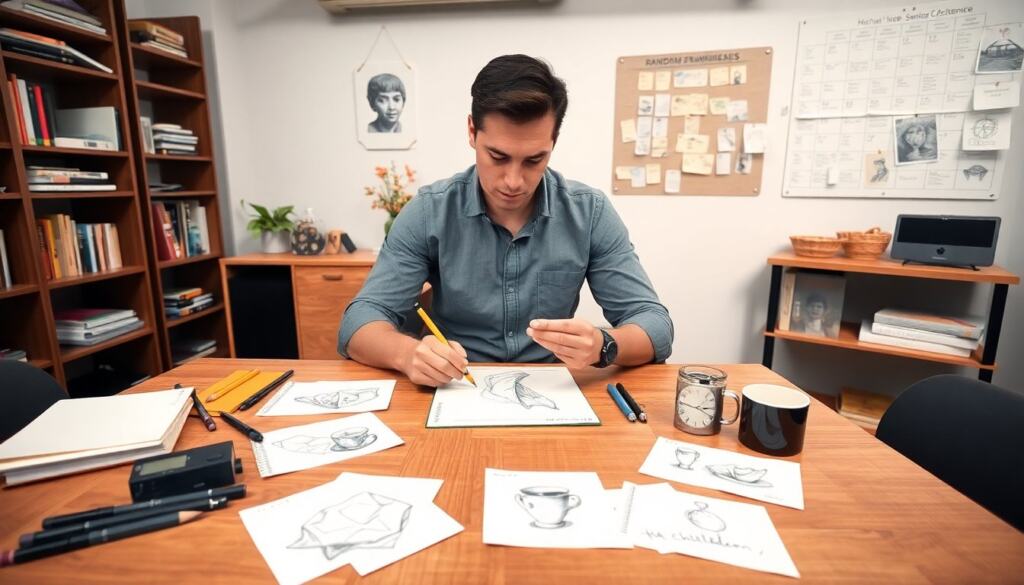
- Draw a crumpled paper in two minutes. The paper folds tell light and shadow. This random drawing ideas prompt trains value.
- Sketch a coffee cup from three angles. Focus on rim, handle, and base. Time yourself for ten minutes.
- Draw five quick gesture poses. Use three lines per figure. The exercise boosts rhythm.
- Render a single leaf with veins and holes. Study edge and form.
- Sketch a small stack of books. Capture spine text blocks and shadows.
- Draw a broken watch. Explore gears and shapes.
- Sketch a window with a view. Include curtain folds or plants.
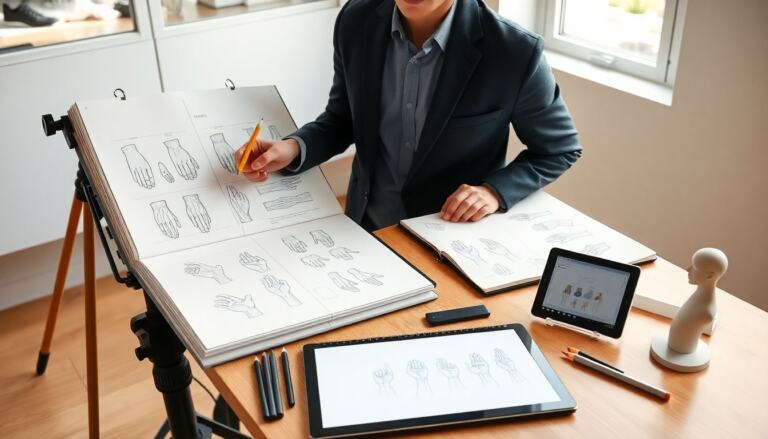
- Draw a hand holding an object. Hands force observation.
- Render an imaginary street lamp. Play with light and cast shadow.
- Draw a simple machine part. Focus on cylinders and bolts.
They can repeat prompts across days. The artist can mix two prompts for variety. These random drawing ideas fit warm‑ups and daily practice.
Theme‑Based Idea Packs: Characters, Objects, And Environments
Group prompts into themes to develop skills and ideas. Each pack gives ten prompts. The packs help shape studies into a small series.
Characters pack
- Design a mail carrier from another time. Think costume and tools.
- Draw a child with a homemade robot toy. Show scale contrasts.
- Create an elderly gardener with seed packets. Show hands and texture.
- Sketch a street musician mid‑song. Capture posture and instrument.
- Draw a merchant with odd wares. Invent small objects.
- Design a courier for a floating city. Mix tech and fabric.
- Draw a night market vendor with lanterns. Use warm and cool values.
- Create a masked performer. Focus on pose and costume detail.
- Sketch a scientist with a messy bench. Include notes and jars.
- Draw a traveler with a map and odd gear.
Objects pack
- Draw a worn suitcase with stickers. Show repairs and straps.
- Sketch a vintage camera from life. Note lenses and knobs.
- Render a teapot with steam. Study reflection.
- Draw a toy from childhood. Add scratches and paint loss.
- Sketch an untidy desk corner. Capture clutter rhythm.
- Draw a single shoe on a porch step.
- Render a closed umbrella with drip marks.
- Draw a broken typewriter key cluster.
- Sketch a lantern with patterned glass.
- Draw a small mechanical bird.
Environments pack
- Draw a rooftop garden at dusk.
- Sketch a narrow alley with hanging signs.
- Render a train interior with passengers.
- Draw a library reading nook.
- Sketch a small seaside market.
- Draw a greenhouse with condensation.
- Render a workshop with tools on pegboard.
- Sketch a mountain pass with cairns.
- Draw a playground at golden hour.
- Render a riverside with fishing boats.
Themed work helps an artist build a cohesive set. The artist can turn these random drawing ideas into portfolios or zine pages.
How To Turn Random Prompts Into Longer Projects And Challenges
The artist can expand a prompt into a multi‑piece project. Each step adds rules and goals. The method keeps work focused and measurable.
Step 1: Pick ten prompts from the list. Number them one to ten. The artist draws one prompt per day for ten days.
Step 2: Add a constraint. The artist limits palette or tools. For example, use only ink and a wash. The constraint pushes creative choices.
Step 3: Increase scale. The artist redraws a favorite prompt at larger size. The larger work tests composition.
Step 4: Combine prompts. The artist merges two prompts into one scene. Combining generates new ideas.
Step 5: Time trials. The artist sets a strict time for each version. Time forces bold decisions and speed.
Step 6: Study and revise. The artist picks three works and refines them over a week. The process teaches iteration.
Step 7: Curate a series. The artist groups ten pieces by theme, color, or mood. Present the set online or as a mini‑zine.
Step 8: Add feedback loops. The artist asks peers to choose one piece to critique. Feedback targets weak areas.
Step 9: Teach a prompt. The artist writes a short tutorial for one prompt and posts it. Teaching clarifies choices and technique.
Step 10: Repeat with new rules. The artist changes constraints and starts again.
These steps help turn simple random drawing ideas into projects that show growth. The process lets the artist track skill and build a consistent practice.