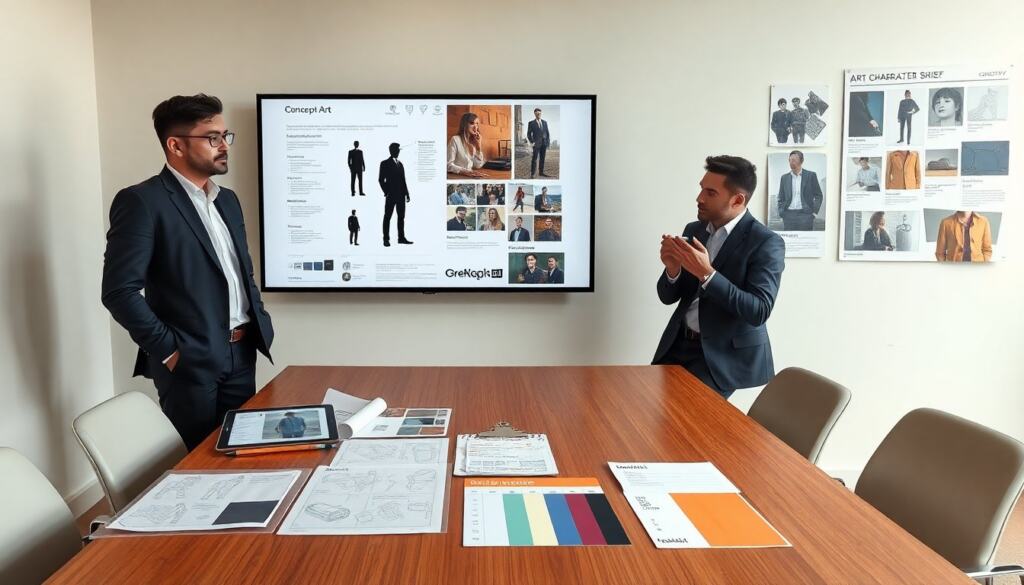
The artist starts with a clear concept art character brief. The brief names goals, role, and limits. The brief states age, culture, and stakes. The brief lists required silhouettes and emotions. The brief sets technical needs for animation, game, or film. The artist keeps the brief short and exact. The artist uses the brief to guide every creative choice.
Key Takeaways
- A clear concept art character brief outlining goals, role, and technical needs is essential to guide creative decisions.
- Developing a strong silhouette and shape language helps convey the character’s traits and ensures readability at small sizes.
- Gathering references and building a focused visual mood board supports consistent color, shape, and costume choices.
- Design costumes and accessories that reflect backstory and remain readable while meeting animation and rigging requirements.
- Include detailed notes on materials, textures, and practicality to assist modelers and riggers in accurate character creation.
- Present final designs with comprehensive character sheets and iterate based on team feedback to refine the concept art character.
Start With A Clear Character Brief And Backstory
The designer writes a short character brief. The brief states function and core trait. The brief states conflict and desire. The designer writes a one-paragraph backstory. The backstory explains origin, motive, and key events. The artist links backstory to silhouette and costume. The artist notes any technical limits for a concept art character. The artist records voice, walk, and signature action. The designer shares the brief with the team and asks for a single round of feedback. The artist updates the brief and moves to references.
Gather References And Build A Visual Mood Board
The artist collects references for shape, color, and mood. The artist saves photos, paintings, and film stills. The artist includes period clothing and real-world props. The artist marks favorite detail and notes why it works. The designer assembles a mood board and groups images by theme. The mood board shows possible palettes for a concept art character. The artist keeps the board tight and focused. The team reviews the board and highlights must-have elements. The artist uses the board to start thumbnail sketches.
Develop Strong Silhouette, Shape Language, And Thumbnails
The artist draws many quick thumbnails. The artist tests large shapes first. The artist chooses three silhouettes that read at small sizes. The artist refines those three into pose thumbnails. The artist evaluates shape language for trait cues. The artist links round shapes to friendly traits and angular shapes to danger. The artist keeps designs readable at a glance. The artist labels each thumbnail with a short note. The artist selects one or two directions for full development of the concept art character.
Design Costume, Accessories, And Color Strategy
The designer picks costume forms that match the backstory. The designer limits costume to a clear silhouette. The designer selects accessories that reveal habit and status. The designer avoids excess detail that breaks readability. The artist tests three palette options for contrast and mood. The artist chooses one palette that supports the character intent. The artist ensures color works in grayscale and in small icons. The artist fits costume elements to animation and rigging needs for a concept art character.
Materials, Textures, And Practicality Notes
The artist lists materials and texture cues. The list names leather, metal, cloth, and worn paint. The artist indicates wear patterns and tear. The artist notes how materials react to light. The artist flags any moving parts for animation. The artist records weight and balance for each piece. The artist writes short practicality notes for props and armor. The notes help the modeler and rigger build the concept art character accurately.
Expression, Poses, And Turnaround Considerations
The artist draws key expressions and three poses. The artist selects a neutral T-pose or A-pose for turnaround. The artist adds front, side, and three-quarter turns. The artist marks joint limits and overlap. The artist writes short pose notes for common actions. The artist shows facial extremes that match the backstory. The artist keeps expressions readable at small sizes. The artist ensures poses match the chosen concept art character attitude.
Presenting The Final Design: Character Sheets, Notes, And Iteration
The artist assembles a character sheet that reads fast. The sheet shows silhouette, color keys, materials, and turnarounds. The sheet adds callouts for important details. The artist includes a one-paragraph summary and three bullet notes for use. The artist prepares layered files and export assets for production. The team reviews the sheet and gives focused feedback. The artist applies a short iteration cycle and logs changes. The artist marks the final file and tags it as the approved concept art character.